
Acupuncture for Migraines and Headaches: What Does the Research Say?
Relief Plus Wellness Team · September 4, 2026 · 10 min read
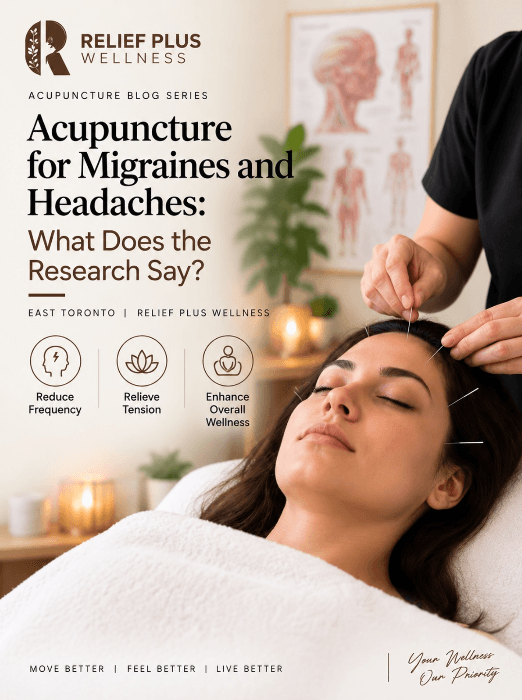
Acupuncture for Migraines and Headaches: What Does the Research Say?
Headaches are extremely common, but not all headaches are the same. Some people experience occasional tension-type headaches, while others live with recurring migraines that can interfere with work, sleep, exercise, and daily activities.
For people looking for non-drug approaches to complement their existing care, acupuncture is one option that has been studied for both migraine and tension-type headaches.
Research summarized by the U.S. National Center for Complementary and Integrative Health (NCCIH) indicates that acupuncture may help relieve headache pain and may reduce the frequency of migraines or tension-type headaches in some people. However, individual responses vary, and acupuncture should not be considered a guaranteed cure.
At Relief Plus Wellness in East Toronto, acupuncture is provided by registered acupuncture practitioners and treatment is individualized according to the patient's symptoms, medical history, and goals.
What Is the Difference Between a Migraine and a Tension Headache?
Although people often use the word "headache" for many different conditions, migraines and tension-type headaches can feel quite different.
Tension-Type Headaches
Tension-type headaches commonly cause a feeling of pressure or tightness around the head. Some people describe the sensation as a band around the forehead or pressure involving the scalp, neck, or shoulders.
They may be associated with factors such as stress, muscle tension, poor sleep, long periods at a desk, or other lifestyle triggers.
Migraines
Migraine is a neurological condition that may involve moderate to severe headache pain, often with additional symptoms.
Possible migraine symptoms can include:
- Throbbing or pulsating head pain
- Pain affecting one side or both sides of the head
- Sensitivity to light
- Sensitivity to sound
- Nausea or vomiting
- Symptoms that worsen with physical activity
- Visual or sensory disturbances known as aura in some people
NCCIH notes that migraines may be triggered by factors such as stress, changes in sleep, missed meals, light exposure, and hormonal changes, although triggers vary considerably from person to person.
How Is Acupuncture Used for Headaches and Migraines?
Acupuncture involves inserting very thin sterile needles into selected points on the body.
Before treatment, your registered acupuncturist will discuss your symptoms and health history. This may include questions about:
- How frequently headaches occur
- Where the pain is located
- How long episodes last
- Possible triggers
- Associated symptoms
- Sleep and stress patterns
- Medications
- Other medical conditions
- Previous headache or migraine diagnosis
The acupuncture points used may vary depending on the individual assessment.
Treatment may involve points on areas such as the head, neck, arms, hands, legs, or feet depending on the practitioner's treatment approach.
What Does the Research Say About Acupuncture for Migraines?
Acupuncture has been studied in multiple clinical trials involving people with migraine.
NCCIH reports moderate-quality evidence that acupuncture may reduce migraine frequency.
A 2016 Cochrane review examined 22 randomized trials of acupuncture for preventing episodic migraines. The review concluded that adding acupuncture to treatment for migraine attacks reduced headache frequency. It also found a small benefit compared with sham acupuncture and suggested that acupuncture may be similarly effective to some preventive medications in the studies reviewed.
NCCIH also summarizes a large meta-analysis involving 39 studies and 20,827 participants across several chronic pain conditions, including migraine. The analysis found acupuncture produced benefits that persisted over time.
This does not mean that everyone with migraine will respond in the same way. Migraine is complex, and treatment decisions should be individualized.
What About Tension-Type Headaches?
Acupuncture has also been studied for tension-type headaches.
NCCIH reports moderate-to-low-quality evidence that acupuncture may reduce the frequency of tension headaches.
A systematic review summarized by NCCIH evaluated studies involving 3,846 participants and found evidence supporting acupuncture and manual therapies as possible non-pharmacological options for tension-type headache management.
However, research findings vary, and headache treatment often works best when the underlying type of headache and contributing factors are correctly identified.
How Might Acupuncture Help?
Researchers continue to study the biological mechanisms associated with acupuncture.
Possible explanations under investigation include effects involving:
- Pain-processing pathways
- Nervous system activity
- Release of endogenous pain-modulating chemicals
- Muscle tension
- Stress-related physiological responses
It is also important to recognize that NCCIH notes some of acupuncture's observed benefit may be related to nonspecific treatment effects such as patient expectations and the overall treatment experience.
For this reason, responsible healthcare information should describe acupuncture as something that may help some patients, rather than claiming that it cures migraine or headaches.
What Happens During an Acupuncture Appointment?
At your first visit, the practitioner will review your symptoms and relevant medical history.
You will then be positioned comfortably while very thin acupuncture needles are inserted at selected points.
The needles typically remain in place for a period of time while you rest.
Sensations vary. Some people notice:
- A brief pinch
- Tingling
- Heaviness
- Warmth
- A dull sensation around the needle
Others feel very little.
Treatment frequency depends on the individual. Some people may receive several treatments over a number of weeks before evaluating whether acupuncture is helping.
There is no single treatment schedule that is appropriate for every patient.
Is Acupuncture Safe?
Acupuncture is generally considered safe when performed by an appropriately trained practitioner using sterile needles.
Possible temporary effects may include:
- Minor bruising
- Mild soreness
- Small amounts of bleeding
- Temporary tiredness
- Light-headedness
Serious complications are uncommon but can occur when acupuncture is performed improperly.
At Relief Plus Wellness, acupuncture treatments are provided by registered acupuncture practitioners.
When Should a Headache Be Medically Evaluated?
A new or unusual headache should not automatically be treated as a routine migraine or tension headache.
Seek urgent medical attention for symptoms such as:
- A sudden, extremely severe headache
- Headache following significant head trauma
- Headache accompanied by weakness or paralysis
- Difficulty speaking
- Confusion or loss of consciousness
- Seizure
- High fever with severe headache or neck stiffness
- Sudden vision loss
- A major change from your usual headache pattern
People experiencing frequent or worsening headaches should also speak with an appropriate healthcare professional to determine the cause.
Acupuncture should not delay appropriate medical diagnosis or emergency care.
Should I Stop My Migraine Medication If I Try Acupuncture?
No medication should be stopped or changed simply because someone begins acupuncture.
Patients taking medications for migraine or other health conditions should continue following the instructions of their prescribing healthcare professional.
Acupuncture may be used as a complementary approach alongside conventional care when appropriate.
Always tell your acupuncturist which medications and treatments you are currently using.
Keeping a Headache or Migraine Diary
Patients with recurring headaches may benefit from tracking their symptoms.
A simple headache diary can include:
- Date and time the headache started
- Duration
- Pain intensity
- Location
- Associated symptoms
- Possible triggers
- Sleep
- Meals
- Stress
- Medications used
- Menstrual cycle when relevant
This information may help you and your healthcare providers identify patterns and evaluate whether a treatment plan is helping.
Acupuncture for Migraines and Headaches in East Toronto
Relief Plus Wellness provides acupuncture at 1403 Gerrard St E, Toronto, ON M4L 1Z5.
We welcome patients from surrounding East Toronto communities including Leslieville, Greenwood-Coxwell, East York, The Beaches, Riverdale, Danforth, Upper Beaches, and nearby Toronto neighbourhoods.
Open 7 Days a Week — 10:00 AM – 7:00 PM.
Direct billing is available with many major insurance providers for eligible services and plans. Individual insurance coverage varies.
Frequently Asked Questions
Can acupuncture cure migraines?
Acupuncture should not be presented as a cure for migraine. Evidence suggests it may help reduce migraine frequency or headache symptoms for some people, but individual results vary.
How many acupuncture sessions do I need for migraines?
There is no universal number. Treatment frequency depends on headache frequency, severity, medical history, treatment goals, and individual response.
Can acupuncture help tension headaches?
Research suggests acupuncture may reduce the frequency of tension-type headaches for some patients, although the quality of evidence varies.
Does acupuncture hurt?
Acupuncture needles are very thin. Some people experience a brief pinch, dull sensation, heaviness, tingling, or warmth, while others feel very little.
Can I use acupuncture together with migraine medication?
Acupuncture may be used alongside conventional healthcare when appropriate. Do not stop or change prescribed medications without speaking with the healthcare professional who prescribed them.
Is acupuncture covered by insurance?
Many extended health insurance plans in Ontario include acupuncture benefits when treatment is provided by an eligible registered practitioner. Coverage depends on the specific insurance plan.
Book an Acupuncture Appointment in East Toronto
If recurring migraines or headaches are affecting your work, sleep, concentration, or daily activities, you may wish to discuss whether acupuncture could be an appropriate complementary option for your care.
Relief Plus Wellness
1403 Gerrard St E, Toronto, ON M4L 1Z5
Phone: (416) 461-1118
Open Daily: 10:00 AM – 7:00 PM
Online Booking: Relief Plus Wellness Jane App
Disclaimer
This article is provided for general educational purposes only and is not intended to diagnose, treat, cure, or prevent disease or replace advice from a physician or other qualified healthcare professional. Headaches may have many different causes. Seek appropriate medical assessment for new, severe, persistent, worsening, or unusual symptoms. Individual responses to acupuncture vary.
Medical Sources
- National Center for Complementary and Integrative Health (NCCIH) — Headaches: What You Need To Know.
- NCCIH — Chronic Pain and Complementary Health Approaches: Usefulness and Safety.
- NCCIH — Headaches and Complementary Health Approaches: What the Science Says.
- Cochrane — Acupuncture for Preventing Migraine Attacks.
Relief Plus Wellness proudly serves patients from Leslieville, The Beaches, East York, Riverdale, Danforth, Greenwood-Coxwell, Upper Beaches, Little India, Scarborough, Downtown Toronto, and surrounding East Toronto communities.