Acupuncture vs. Osteopathy: Which Wellness Service Is Right for You?
Relief Plus Wellness Team · July 31, 2026 · 9 min read
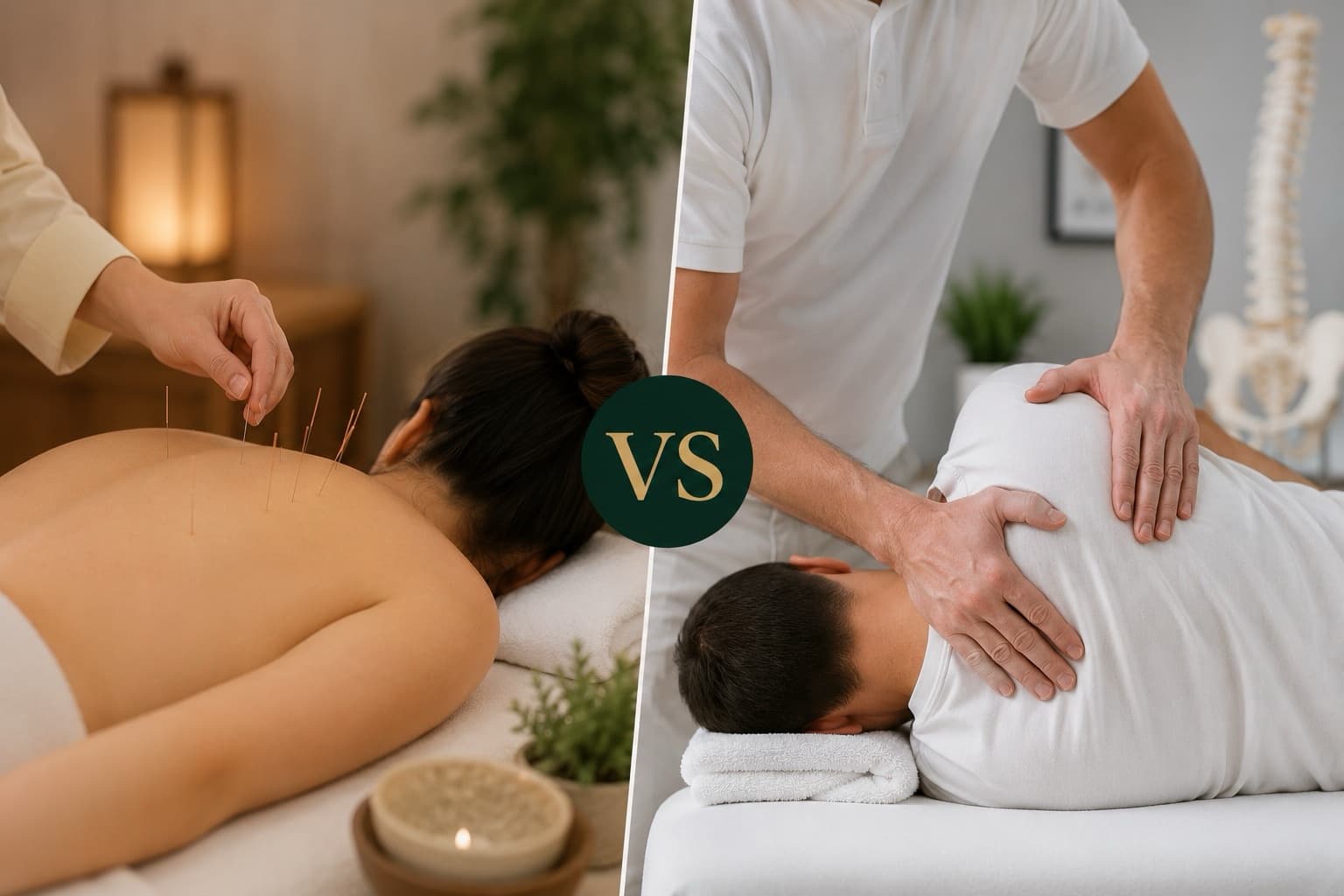
If you're looking for a natural, non-surgical approach to support your health and well-being, you've likely come across acupuncture and osteopathy. Both services are widely used in wellness settings and aim to help people improve comfort, movement, and overall quality of life. However, they use very different techniques and philosophies.
At Relief Plus Wellness, we offer both acupuncture and osteopathic therapy for clients in Toronto and East Toronto. One of the most common questions we hear is: 'Which treatment is better for me?' The answer depends on your health concerns, preferences, and goals.
This article explains the differences between acupuncture and osteopathy, what current research says, and how to decide which service may be appropriate for you.
Understanding Acupuncture
Acupuncture is a component of Traditional Chinese Medicine (TCM) that has been practiced for thousands of years. It involves inserting very thin, sterile needles into specific points on the body.
Traditional Chinese Medicine describes acupuncture as helping restore balance in the body's energy systems (Qi). Modern scientific research has explored acupuncture from a biomedical perspective, suggesting it may influence:
- The nervous system
- Pain-modulating pathways
- Connective tissues
- Local blood circulation
- The release of naturally occurring pain-relieving chemicals
Although researchers continue to study its mechanisms, acupuncture is now used worldwide as a complementary therapy for various health conditions.
Understanding Osteopathy
Osteopathy is a manual therapy that focuses on the relationship between the body's muscles, joints, connective tissues, nerves, and overall function. An osteopathic practitioner uses hands-on techniques to assess and treat areas of restricted movement or tension.
Treatment may include:
- Joint mobilization
- Soft tissue techniques
- Gentle stretching
- Muscle energy techniques
- Myofascial release
- Postural assessment
- Movement education
Unlike acupuncture, osteopathy does not involve needles.
The Main Differences
- Acupuncture uses sterile, single-use needles, while osteopathy uses hands-on manual techniques.
- Acupuncture is based on Traditional Chinese Medicine with modern biomedical research, whereas osteopathy is based on anatomy, biomechanics, and functional movement.
- Acupuncture focuses on stimulating acupuncture points, while osteopathy focuses on improving movement and body mechanics.
- Acupuncture involves minimal physical manipulation, whereas osteopathy includes hands-on work with muscles and joints.
- Acupuncture sessions usually include a 20–30 minute rest period with needles, while osteopathy sessions involve continuous hands-on assessment and treatment.
Both approaches are individualized and may be used alongside conventional healthcare when appropriate.
Conditions People Commonly Seek Treatment For
People commonly seek acupuncture for:
- Chronic neck pain
- Low back pain
- Knee osteoarthritis pain
- Tension-type headaches
- Some migraine prevention
- General wellness
- Stress management
People commonly seek osteopathy for:
- Joint stiffness
- Muscle tightness
- Back discomfort
- Neck pain
- Postural concerns
- Limited mobility
- Sports-related muscle tension
It is important to note that treatment does not guarantee symptom relief, and effectiveness varies between individuals.
What Does the Evidence Say?
Acupuncture
Research has shown moderate to strong evidence supporting acupuncture for several pain-related conditions. Clinical practice guidelines recognize acupuncture as a treatment option for some types of:
- Chronic low back pain
- Neck pain
- Osteoarthritis
- Certain chronic pain conditions
Evidence for other conditions remains mixed or limited.
Osteopathy
Research on osteopathic manual therapy continues to grow. Some systematic reviews suggest osteopathic techniques may provide short-term improvements in pain and physical function for certain musculoskeletal conditions, particularly:
- Low back pain
- Neck pain
- Some joint-related disorders
However, the quality of evidence varies, and more high-quality studies are needed in several areas.
What Happens During an Acupuncture Appointment?
- Health assessment
- Discussion of symptoms
- Treatment plan
- Needle insertion
- Rest period (usually 20–30 minutes)
- Needle removal
- Follow-up recommendations
Many clients report feeling relaxed during treatment.
What Happens During an Osteopathy Appointment?
- Health history
- Movement assessment
- Posture evaluation
- Joint mobility assessment
- Hands-on treatment
- Stretching or movement advice
- Home care recommendations
Treatment is generally interactive, with the practitioner working directly on different areas of the body throughout the appointment.
Which Treatment Is Better for Pain?
There is no single answer. The best treatment depends on your diagnosis, symptoms, medical history, personal preferences, and clinical assessment.
For example:
- Someone with chronic muscular tension may benefit from either treatment.
- Someone uncomfortable with needles may prefer osteopathy.
- Someone interested in acupuncture may appreciate its relaxing nature.
- In some cases, practitioners recommend combining both therapies as part of a broader treatment plan.
Can Acupuncture and Osteopathy Be Combined?
Yes. Many wellness clinics, including Relief Plus Wellness, offer both services because they may complement one another.
For example, an osteopathic treatment may focus on improving joint mobility and muscle function, while acupuncture may be incorporated to help address pain perception or muscle tension. The decision to combine therapies should always be individualized.
Are These Treatments Safe?
Acupuncture Risks
- Small bruises
- Mild soreness
- Temporary fatigue
- Minor bleeding at needle sites
Serious complications are rare when sterile, single-use needles are used by trained practitioners.
Osteopathy Risks
- Mild muscle soreness
- Fatigue
- Temporary stiffness
More forceful manipulation techniques may not be appropriate for everyone, particularly individuals with certain bone or vascular conditions. Your practitioner will assess whether treatment is suitable.
Who Should Talk to Their Healthcare Provider First?
- Cancer
- Osteoporosis
- Bleeding disorders
- Recent surgery
- Severe neurological symptoms
- Unexplained weight loss
- Fever
- Recent fractures
- Pregnancy (for certain techniques)
Complementary therapies should not delay diagnosis or treatment of serious medical conditions.
Frequently Asked Questions
Which treatment works faster?
Response times vary. Some people notice changes after one session, while others require several visits. There is no guarantee of immediate improvement.
Can I receive both treatments on the same day?
In many cases, yes. Whether this is appropriate depends on your health status and treatment goals. Your practitioner can advise you.
Do acupuncture needles hurt?
Most people report only mild sensations such as tingling, warmth, or a brief pinch. The needles are much thinner than injection needles.
Does osteopathy involve cracking joints?
Not always. Osteopathic treatment includes a wide range of gentle manual techniques. Joint manipulation is only one possible approach and is not used in every session.
Which treatment is better for stress?
Some people find acupuncture particularly relaxing, while others benefit from the hands-on approach of osteopathy. Individual experiences vary.
Choosing the Right Service
Ask yourself:
- Are you comfortable with needles?
- Are you looking for manual therapy focused on movement?
- Do you have muscle tightness, joint stiffness, or chronic pain?
- Have you discussed your condition with a healthcare provider?
If you're unsure, an initial consultation can help determine the most appropriate treatment based on your goals and health history.
Final Thoughts
Acupuncture and osteopathy are different approaches that share a common goal: supporting your overall health and well-being through non-surgical, individualized care.
Acupuncture uses thin needles to stimulate specific points and has growing evidence for certain pain-related conditions. Osteopathy uses hands-on manual techniques to improve movement and address musculoskeletal function.
At Relief Plus Wellness, we believe the best treatment is one that is tailored to your individual needs. During your first visit, we'll discuss your concerns, answer your questions, and help you decide which approach—or combination of approaches—is most appropriate for your wellness journey.
Relief Plus Wellness proudly serves patients from Leslieville, The Beaches, East York, Riverdale, Danforth, Greenwood-Coxwell, Upper Beaches, Little India, Scarborough, Downtown Toronto, and surrounding East Toronto communities.