Hijama (Wet Cupping) in East Toronto | Safety & What to Expect | Relief Plus Wellness
Relief Plus Wellness Team · September 5, 2026 · 8 min read
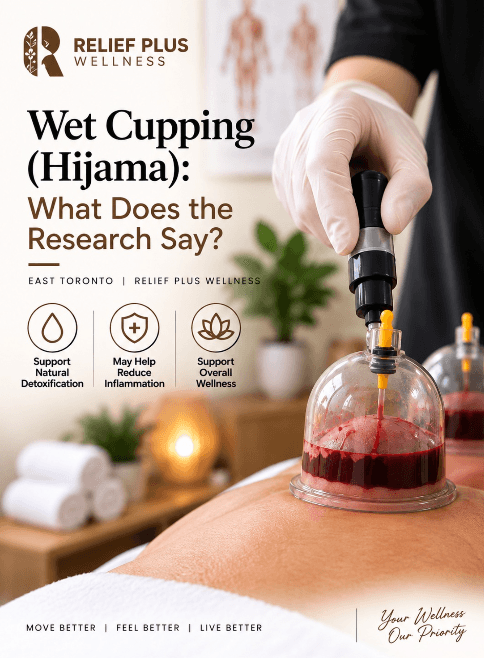
Hijama (Wet Cupping): What It Is, What to Expect & Safety
Hijama, also called wet cupping, combines suction with small superficial openings in the skin so that a limited amount of blood is collected in the cup.
It differs from dry cupping, which uses suction without intentionally opening the skin.
Because Hijama involves blood and broken skin, appropriate screening, hygiene, infection-control procedures, and safe handling of equipment are especially important.
What Does Research Say?
Research into cupping exists, but much of it is considered low quality.
NCCIH states that cupping may help reduce certain types of pain, but the evidence is not strong.
There is not enough high-quality research to support many other commonly advertised health claims.
Hijama should therefore not be advertised as curing chronic diseases, removing toxins, cleaning the blood, treating infertility, or guaranteeing pain relief.
What Happens During Hijama?
A Hijama session may involve:
- Health screening
- Placement of cups to create suction
- Removal of the cups
- Small superficial skin openings
- Brief reapplication of cups
- Cleaning and dressing of the treated skin
The practitioner should explain the procedure and appropriate aftercare before treatment.
What Are the Risks of Hijama?
Because wet cupping involves superficial openings in the skin and removal of a limited amount of blood, it carries risks that are different from dry cupping.
Possible effects include:
- Temporary skin marks
- Soreness
- Persistent discoloration
- Scarring
- Burns
- Infection
Repeated wet cupping may contribute to anemia because blood is removed.
Blood-contaminated equipment that is improperly processed can also transmit blood-borne infections.
Who Should Be Cautious With Hijama?
Before booking Hijama, tell your practitioner about any relevant medical conditions, medications, or recent procedures.
You should specifically inform your practitioner if you:
- Use anticoagulants
- Have a bleeding disorder
- Have anemia
- Have poor wound healing
- Have an active skin infection
- Recently had surgery
- Are pregnant
- Have a significant medical condition
Your individual circumstances should be considered before wet cupping is performed.
Does Dark Blood Mean Toxins Were Removed?
No reliable medical conclusion about toxins or disease severity can be made from the colour of blood collected during Hijama or from the appearance of cupping marks.
Dark-coloured blood does not establish that toxins have been removed from the body.
For this reason, Hijama should not be marketed as a procedure that detoxifies the body, cleans the blood, or removes harmful toxins.
Hijama vs. Dry Cupping
Hijama and dry cupping both use suction, but the procedures are different.
Hijama, or wet cupping, involves small superficial openings in the skin and the collection of a limited amount of blood.
Dry cupping uses suction without intentionally opening the skin.
Because Hijama involves broken skin and blood exposure, hygiene and infection-control procedures are particularly important.
Hijama in East Toronto
Relief Plus Wellness offers Hijama (Wet Cupping) in East Toronto.
Relief Plus Wellness
1403 Gerrard St E, Toronto, ON M4L 1Z5
Phone: (416) 461-1118
Open Daily: 10:00 AM – 7:00 PM
Female practitioner availability may be requested, subject to scheduling.
Frequently Asked Questions
Is Hijama the same as dry cupping?
No. Hijama involves superficial skin opening and the collection of a limited amount of blood, while dry cupping uses suction without intentionally opening the skin.
Can Hijama detox the body?
Current evidence does not establish Hijama as a medical detoxification procedure. Dark blood or cupping marks should not be interpreted as evidence that toxins have been removed.
Does Hijama leave marks?
Yes. Temporary skin discoloration or marks can occur after cupping. In some cases, soreness, persistent discoloration, scarring, burns, or infection may occur.
Is Hijama safe for everyone?
No. Individual suitability varies. People using anticoagulants, with bleeding disorders or anemia, active skin infections, poor wound healing, recent surgery, pregnancy, or significant medical conditions should discuss their circumstances with an appropriate healthcare professional and practitioner before treatment.
Can Hijama cure chronic diseases?
No cure should be promised. Research on cupping is limited, and there is not enough high-quality evidence to support many commonly advertised health claims.
Book Hijama (Wet Cupping) in East Toronto
If you are considering Hijama as a complementary wellness service, you can book an appointment with Relief Plus Wellness.
Relief Plus Wellness
1403 Gerrard St E, Toronto, ON M4L 1Z5
Phone: (416) 461-1118
Open Daily: 10:00 AM – 7:00 PM
Disclaimer
This article is provided for general educational purposes only. Hijama carries risks including bleeding, infection, skin injury, soreness, discoloration, scarring, and burns. Individual suitability varies. This information does not diagnose, treat, cure, or prevent any medical condition and should not replace appropriate medical advice.
Source
- NCCIH — Cupping.
Relief Plus Wellness proudly serves patients from Leslieville, The Beaches, East York, Riverdale, Danforth, Greenwood-Coxwell, Upper Beaches, Little India, Scarborough, Downtown Toronto, and surrounding East Toronto communities.