Tuina Massage & Gua Sha for Neck and Shoulder Tightness: What Does the Research Say?
Relief Plus Wellness Team · September 4, 2026 · 10 min read
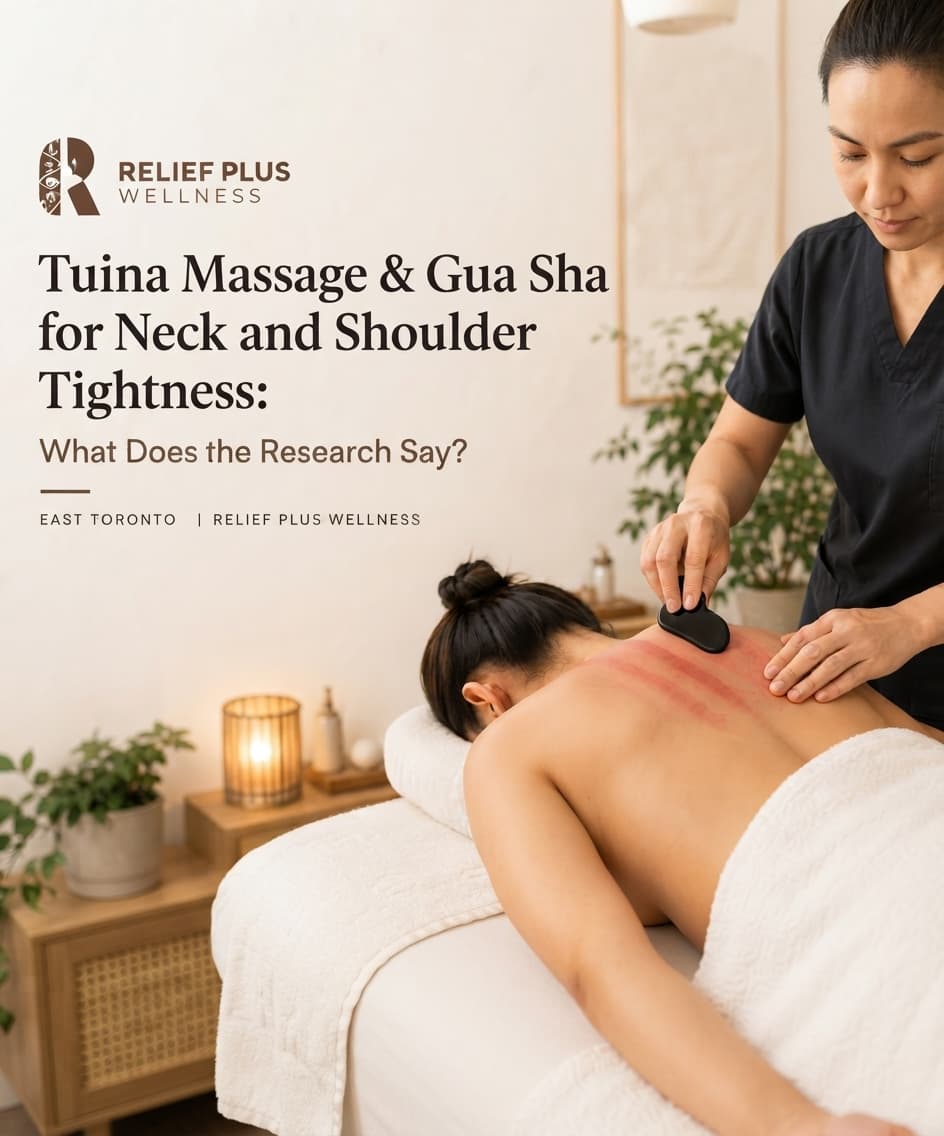
Tuina Massage & Gua Sha for Neck and Shoulder Tightness: What Does the Research Say?
Neck and shoulder tightness is common among people who spend long hours at a computer, drive frequently, perform repetitive physical work, exercise intensely, or experience ongoing muscular tension.
Tuina and Gua Sha are traditional Chinese medicine techniques that may be used as part of an individualized approach to muscular discomfort and mobility.
At Relief Plus Wellness in East Toronto, Tuina Massage & Gua Sha treatments are tailored to the patient's symptoms, health history, comfort level, and treatment goals.
What Is Tuina Massage?
Tuina is a traditional Chinese manual therapy.
Depending on the practitioner's assessment, a Tuina session may involve techniques such as:
- Pressing
- Kneading
- Rolling
- Rubbing
- Gentle stretching
- Joint mobilization
- Rhythmic manual pressure
Tuina differs from a general relaxation massage because the practitioner may focus more specifically on areas of muscular tension, movement restriction, and surrounding soft tissues.
Research into Tuina for musculoskeletal conditions is still developing.
A 2026 systematic review and meta-analysis examining Tuina for chronic nonspecific low back pain included 21 randomized trials and 1,612 participants. The authors reported improvements in pain and function compared with control interventions, but rated the certainty of the evidence as low. This means the findings are promising but stronger research is still needed.
What Is Gua Sha?
Gua Sha is a traditional technique that uses a smooth-edged tool to apply controlled strokes over lubricated skin.
It is commonly applied to areas such as:
- The upper back
- Shoulders
- Neck
- Arms
- Legs
Pressure should be adjusted according to the patient's comfort and skin condition.
Temporary redness or darker skin discoloration can occur after treatment.
Cleveland Clinic notes that Gua Sha is generally considered safe when performed appropriately, but excessive pressure may cause soreness, bruising, or skin discoloration. It should not be performed over irritated, wounded, inflamed, or sunburned skin.
What Does the Research Say About Gua Sha?
Research on Gua Sha for musculoskeletal pain remains limited.
A systematic review of controlled clinical trials found that some studies reported favorable effects on pain, but the authors concluded that the available evidence was insufficient to establish effectiveness because the number and quality of studies were limited.
For this reason, Gua Sha should not be described as a guaranteed treatment or cure for pain.
A more accurate description is that some patients may experience temporary changes in muscular comfort or tension, while responses vary between individuals.
Why Might Tuina and Gua Sha Be Used Together?
Tuina and Gua Sha use different manual techniques.
Tuina allows the practitioner to work directly with muscles, soft tissues, and movement using hands-on techniques.
Gua Sha may be added selectively to appropriate areas of soft tissue when the practitioner considers it suitable.
Not every patient requires both techniques.
The choice of treatment depends on the individual assessment, comfort level, medical history, and goals.
What Should I Expect During a Session?
Before treatment, your practitioner may ask about:
- Where you feel tightness or discomfort
- How long the symptoms have been present
- Activities that aggravate or relieve the symptoms
- Previous injuries
- Medications
- Relevant health conditions
- Your treatment goals
During Tuina, the practitioner may use the hands, fingers, palms, or forearms to apply controlled pressure and movement.
If Gua Sha is included, a lubricant is applied and a smooth-edged tool is moved over selected areas using controlled strokes.
Treatment intensity should remain within a tolerable level.
Why Can Gua Sha Leave Red Marks?
Temporary redness or darker discoloration may appear after Gua Sha.
The amount of visible change varies from person to person and depends on factors such as:
- Pressure
- Treatment duration
- Skin sensitivity
- Treatment location
These marks generally fade naturally over time.
Visible marks are not an indication that stronger treatment is better.
Excessive pressure can increase the likelihood of soreness, bruising, or skin irritation.
Is Tuina Massage Painful?
Tuina may range from gentle to firm depending on the treatment goal and patient preference.
Areas of muscular tightness can sometimes feel tender when pressure is applied.
Patients should tell their practitioner if the pressure becomes uncomfortable.
Treatment should be adjusted according to the individual's tolerance.
Who Should Be Careful With Tuina or Gua Sha?
Tell your practitioner before treatment if you:
- Take blood-thinning medication
- Have a bleeding disorder
- Bruise easily
- Have fragile skin
- Have an active skin infection or rash
- Have an open wound
- Recently had surgery
- Have a suspected fracture or acute injury
- Are pregnant
- Have a significant medical condition
Gua Sha should not be performed directly over irritated, inflamed, wounded, or sunburned skin.
When Should Neck or Shoulder Symptoms Be Medically Evaluated?
Neck and shoulder tightness is often musculoskeletal, but some symptoms require medical assessment.
Seek appropriate medical care if symptoms are associated with:
- Major trauma
- Progressive weakness
- Persistent numbness
- Loss of coordination
- Severe unexplained pain
- Chest pain
- Difficulty breathing
- Fever with severe neck stiffness
- Rapidly worsening neurological symptoms
Manual therapy should not delay appropriate medical assessment.
What Should I Do After Tuina & Gua Sha?
Some people may notice temporary tenderness, redness, or skin sensitivity after treatment.
General aftercare may include:
- Keeping the treated area clean
- Avoiding aggressive rubbing of sensitive skin
- Avoiding excessive heat if the skin feels irritated
- Allowing temporary marks to fade naturally
- Following any individualized instructions from your practitioner
Seek medical attention if you develop severe pain, blistering, significant swelling, signs of infection, or another concerning reaction.
Tuina Massage & Gua Sha in East Toronto
Relief Plus Wellness provides Tuina Massage & Gua Sha at 1403 Gerrard St E, Toronto, ON M4L 1Z5.
We serve patients from nearby communities including Leslieville, Greenwood-Coxwell, East York, The Beaches, Riverdale, Danforth, Upper Beaches, and surrounding East Toronto neighbourhoods.
Open Daily: 10:00 AM – 7:00 PM
Insurance eligibility depends on the service provided, the practitioner, and the patient's individual insurance plan. Patients should confirm their own coverage.
Frequently Asked Questions
Is Tuina the same as regular massage?
No. Tuina is a traditional Chinese manual therapy that uses techniques such as pressing, kneading, rolling, stretching, and mobilization.
Does Gua Sha always leave marks?
No. Some patients develop visible redness or darker discoloration, while others experience very little visible change.
How long do Gua Sha marks last?
The duration varies. Temporary redness or discoloration usually fades gradually, but it may remain visible for several days in some people.
Can Tuina and Gua Sha be done together?
They may be combined when the practitioner determines that both techniques are appropriate for the individual.
Can Tuina help with neck and shoulder tightness?
Tuina has been studied for several musculoskeletal conditions, and some research reports improvements in pain and function. However, evidence quality varies, so results should not be considered guaranteed.
Is Gua Sha safe?
Gua Sha is generally considered safe when performed appropriately. Temporary redness, soreness, bruising, or skin discoloration can occur.
Book Tuina Massage & Gua Sha in East Toronto
If neck or shoulder tightness is affecting your comfort or movement, a consultation can help determine whether Tuina Massage & Gua Sha may be appropriate for you.
Relief Plus Wellness
1403 Gerrard St E
Toronto, ON M4L 1Z5
Phone: (416) 461-1118
Open Daily: 10:00 AM – 7:00 PM
Disclaimer
This article is for general educational purposes only and is not intended to diagnose, treat, cure, or prevent disease or replace individualized healthcare advice. Individual responses to Tuina and Gua Sha vary. Seek appropriate healthcare assessment for severe, persistent, worsening, or concerning symptoms.
Sources
- PubMed — Tuina for Chronic Non-Specific Low Back Pain: A Systematic Review and Meta-Analysis of Randomized Controlled Trials (2026).
- PubMed — Using Gua Sha to Treat Musculoskeletal Pain: A Systematic Review of Controlled Clinical Trials.
- Cleveland Clinic — Gua Sha: Benefits and How To Do It.
Relief Plus Wellness proudly serves patients from Leslieville, The Beaches, East York, Riverdale, Danforth, Greenwood-Coxwell, Upper Beaches, Little India, Scarborough, Downtown Toronto, and surrounding East Toronto communities.